


VALD athlete assessment
Don’t guess. Measure.
Strength, jump power, landing control and left–right balance are turned into numbers with the VALD measurement systems used by professional clubs worldwide. Invisible gaps become visible; training is planned on data, not on a hunch.
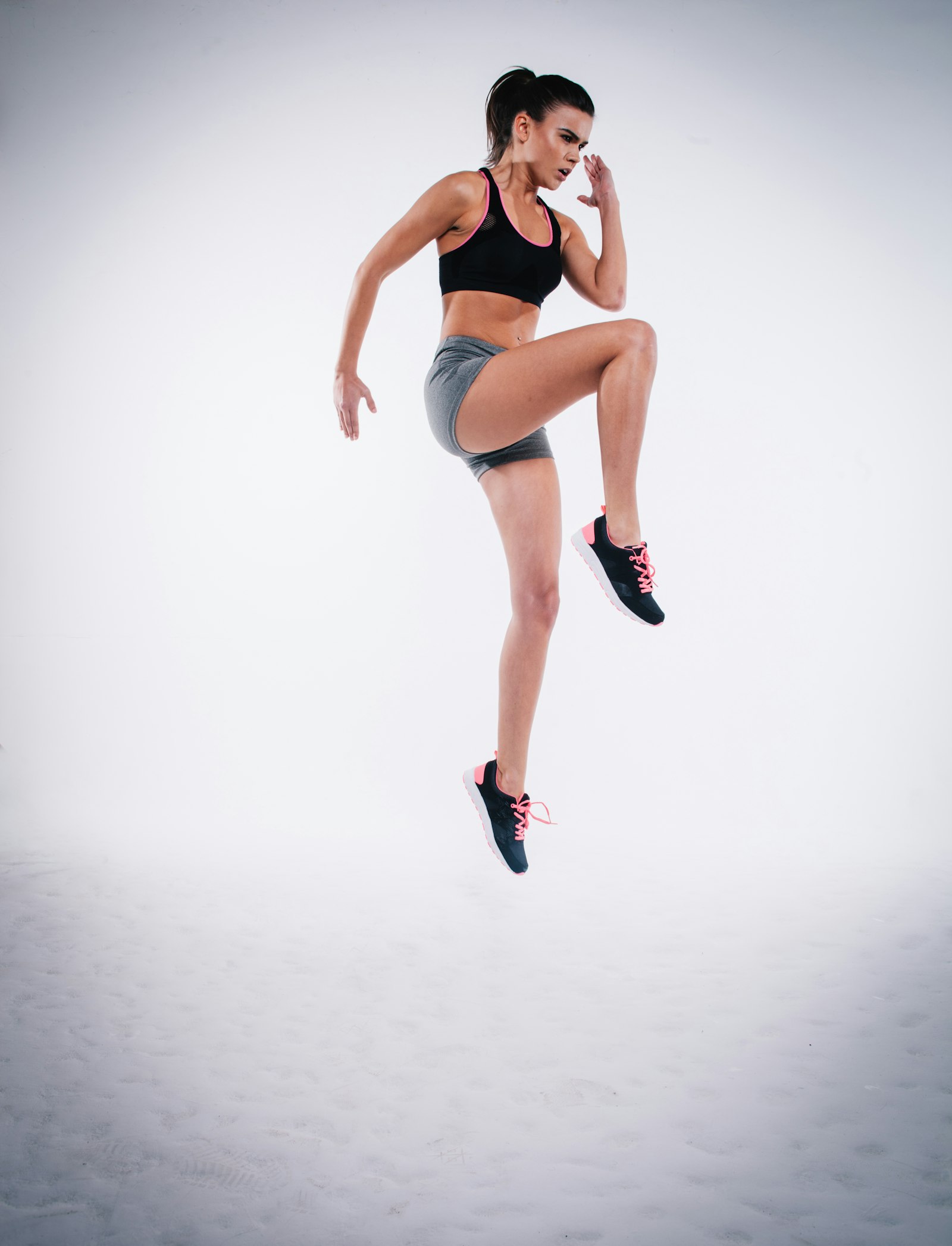
An athlete usually notices “something is wrong” after the injury.
Yet many of its precursors — a strength deficit building in one leg, load shifting to one side on landing, a widening gap between hamstring and quadriceps — are invisible to the eye. The athlete trains, plays, has no complaint; the body has quietly put the work on one side. VALD systems measure exactly this: right and left independently, at laboratory precision, in minutes. We combine the measurement with clinical evaluation and give the athlete, the coach and the medical team one report that speaks the same language.
What we use
Measurement infrastructure that came out of the literature — not a fitness gadget.
VALD is an Australian human-measurement technology company whose systems are used by professional clubs, national teams, university sport, elite training centres and the military. The NordBord, now the standard for hamstring testing, was developed at Queensland University of Technology to study eccentric strength and asymmetry in the field, and has been used in hundreds of scientific publications.
ForceDecks — dual force platforms
Two independent high-precision platforms measure the force produced during jump, landing and balance for right and left separately: jump height and power, time to stabilise on landing, which leg does how much of the work.
NordBord — hamstring test system
Measures eccentric knee-flexor strength of each leg separately during the Nordic hamstring exercise: posterior-thigh strength and the gap between the two legs — critical in sprint- and acceleration-loaded sports.
ForceFrame — isometric strength
Upper- and lower-body isometric strength in more than 30 positions: hip adductor/abductor balance (groin), knee-extension strength, shoulder internal/external rotator balance.
VALD Hub — cloud platform
All measurements in one place, compared with normative data from millions of tests: the athlete’s values expressed as a percentile for their age and sex, and tracked over time.
What it changes
Eight concrete gains for the athlete.
- 1
Makes invisible asymmetry visible
A 20 % strength difference between legs cannot be felt. Each side is measured simultaneously and independently; thresholds are colour-coded — under 10 % normal, 10–15 % monitor, over 15 % significant.
- 2
Makes risk discussable before injury
Strength deficit, asymmetry and weak landing control are linked to injury risk in the literature. Seeing them early allows intervention pre-season, not mid-season.
- 3
Objectifies the return-to-play decision
“I feel fine” is not enough. Limb-symmetry index, asymmetry percentage and pain-free range of motion put the decision on data rather than feeling.
- 4
Shows where performance is lost
High isometric strength with a below-average jump says the problem is not force production but using force quickly — and changes the programme completely.
- 5
Personalises training
Two athletes in the same team do not need the same work. Measurement ends the era of “one programme for everyone”.
- 6
Proves progress
After 8–12 weeks the athlete is re-measured: not “I feel better” but +4 cm on CMJ, asymmetry from 20 % to 8 %.
- 7
Compares with peers
VALD Hub norms express a value as a percentile for age and sex: “300 N” is abstract, “74th percentile” is a position.
- 8
Builds a common language
The coach wants to load, the physiotherapist wants to protect. A shared measurement table takes that conversation out of opinion.
Standard battery
What we measure.
The standard athlete-assessment battery below is extended according to sport and history. Every value is reported both absolute (Newton, centimetre, second) and as a percentile.
| Test | System | What it evaluates |
|---|---|---|
| Countermovement Jump (CMJ) | ForceDecks | Explosive power and jump-height capacity |
| Drop Jump — RSI | ForceDecks | Reactive strength: jump produced against ground-contact time |
| Land and Hold (bilateral) | ForceDecks | Time to stabilise on landing and load share between sides |
| Single-Leg Land and Hold | ForceDecks | Single-leg neuromuscular control — critical for knee and ankle |
| Nordic Hamstring | NordBord | Eccentric hamstring strength and left–right asymmetry |
| Knee Extension (isometric) | ForceFrame | Quadriceps strength and side difference |
| Hip Adductor / Abductor | ForceFrame | Groin-region balance (Add:Abd ratio) |
| Shoulder Internal / External Rotation | ForceFrame | Rotator-cuff balance — decisive in overhead sports |
| Hip Extension (isometric) | ForceFrame | Hip drive and posterior-chain contribution |
Reference thresholds we use
- Asymmetry: under 10 % normal · 10–15 % monitor · over 15 % significant
- Hip Add:Abd ratio: target 0.80 and above
- Shoulder internal:external rotation: roughly the 1.0–1.5 band
- Return to play: strength ratio to the healthy side 90 % and above, asymmetry under 10 %, pain-free full range of motion
How it works
Five steps from history to re-test.
-
01
Interview and history
Sport, position, training load, past injuries and current complaints are recorded.
-
02
Measurement (45–60 min)
After a standard warm-up the battery is applied. Tests are pain-free, non-invasive and repeatable.
-
03
Clinical evaluation
Physician and physiotherapist interpret the measurement data together with examination findings.
-
04
Report
A personal assessment report: tables, risk ranking, clinician commentary and field recommendations for the coach.
-
05
Programme and re-test
After an 8–12-week targeted programme a control measurement shows the change in numbers.
Who it is for
Professional and licensed athletes
Pre-season screening, in-season monitoring, return-to-play decisions.
Young athletes and sport schools
Development tracking through growth and early detection of risk.
After injury
Objective monitoring of rehabilitation and verification of return criteria.
Amateur athletes and active people
To see the strength deficits behind recurring pain.
Teams and clubs
Squad-wide screening, comparative reporting and priority ranking.
Frequently asked
How long does the measurement take?
The standard battery is about 45–60 minutes including warm-up. Extended assessments may take longer.
Do the tests hurt?
No. The tests are non-invasive and performed within the range the athlete tolerates. A test limited by pain is reported as a clinically invalid measurement, not as “low strength”, and repeated.
I am not injured. Should I still do it?
Yes. The real value of measurement is seeing the gaps before a complaint appears. The first measurement also creates the personal baseline you will compare against if an injury ever happens.
How often should it be repeated?
Typically 2–3 times a season: pre-season, mid-season and end of season. If a targeted programme is running, a control every 8–12 weeks.
Does measurement prevent injury?
No test guarantees against injury or predicts it with certainty; injury is multifactorial. What measurement does is make modifiable gaps visible and direct the intervention. Saying this honestly is worth more than an exaggerated promise.
Is it suitable for my child?
Yes. The tests are safely applied in growing athletes and are especially valuable for tracking development in this age group.
VALD, ForceDecks, NordBord, ForceFrame and VALD Hub are trademarks of VALD. We use VALD systems; we do not claim ownership of them. Measurements, genetic and biometric insights describe tendencies; they are not diagnoses and do not replace clinical examination. Every clinical decision stays with qualified medical staff.
Start here
Tell us who you are, and what you are trying to decide.
A club, a school, a parent or an athlete — the first conversation is the same: what do you already know, and what would change if you knew more? We reply within two working days.
We do not publish prices. Every programme is scoped to the organisation or family — tell us your situation and we will propose one.