ALLDREAMS SPORTOTEAM

Sports DNA · Alldreams Sports Genetics

Don’t estimate the athlete’s potential. Read it.

From a single saliva sample we read power, endurance, recovery, injury tendency and nutrition response at the genetic level. Training and development planning becomes personal — for the professional and for the child at a sport school.

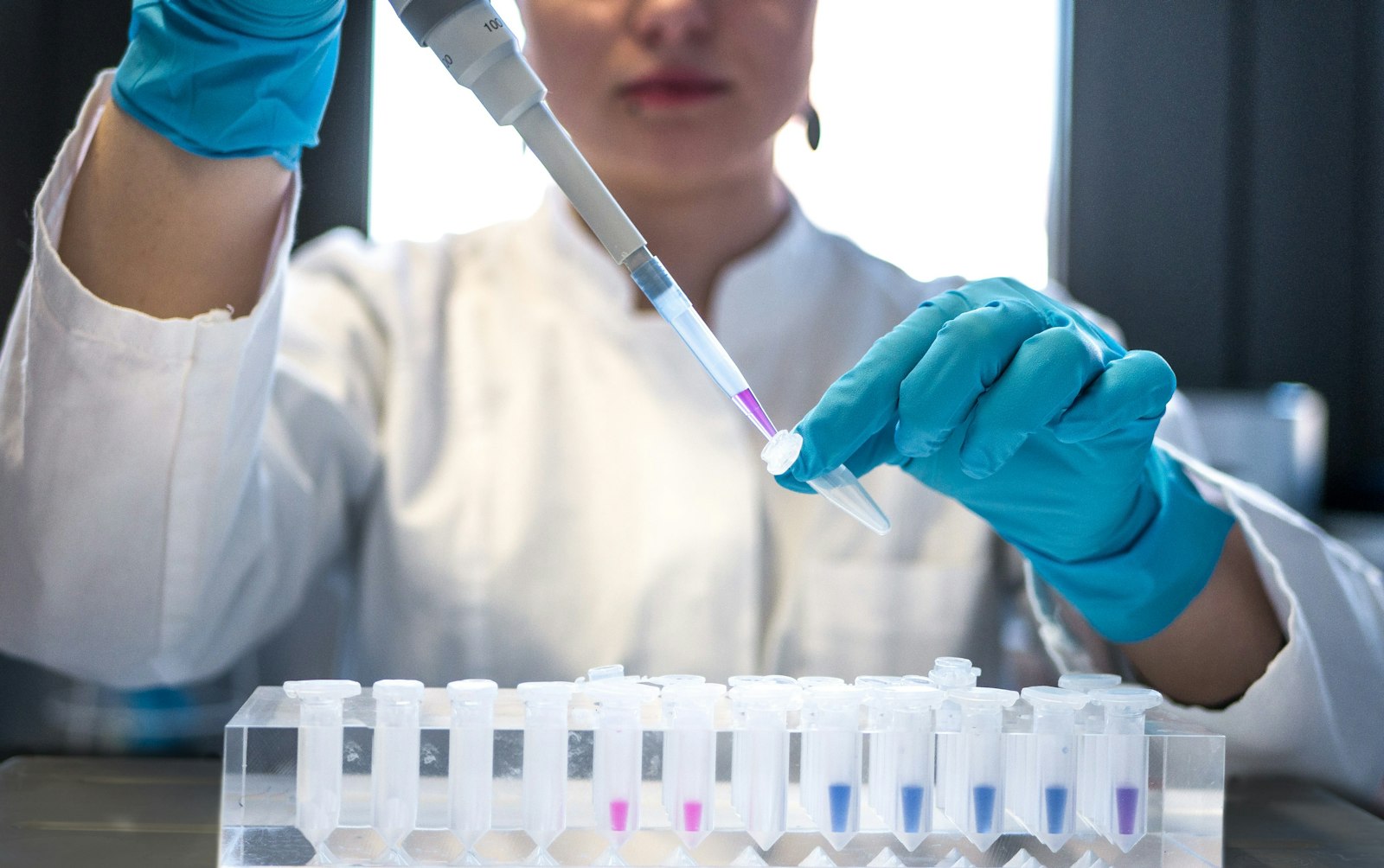
A scientist pipetting samples in a laboratory

Why genetics

The same training does not give the same result in every athlete.

Two children follow the same programme; one thrives, the other tires and gets injured. The difference is often not effort but biology. Your blood values change, your weight changes, your fitness improves — your DNA stays largely the same for life. It is a different layer of information: not how you are today, but what you were built with.

01

Right direction

Power or endurance? See the athlete’s natural tendency early; do not leave discipline and position to chance.

02

Right load

Muscle damage and recovery speed vary from person to person. Plan training volume and rest accordingly.

03

Fewer injuries

When tendon–ligament profile, ACL and stress-fracture tendency are known, the protective programme is built from the start.

04

Right nutrition

Carbohydrate, fat, caffeine, vitamin D and iron responses are individual. The plate is part of the programme.

A genetic test is not a diagnostic tool and does not determine talent on its own. It is a road map to be read together with training, nutrition, sleep and motivation.

The Sports DNA journey

Four progressive levels. Each one contains the last.

MOVE → TRAIN → PERFORM → PEAK. Every higher level includes every trait from the level below, and adds a layer.

Foundation

MOVE

Know the body. Start with insight.

  • Athletic profile: power–endurance tendency, aerobic capacity, exercise response
  • Muscle performance, muscle fatigue, general recovery tendency
  • General injury susceptibility
  • Carbohydrate and fat response, caffeine metabolism, vitamin D and iron predisposition
  • Blood-pressure response to exercise, BMI and weight predisposition
traits analysed
25–30
Report level
Essential

Who it is for Active people and athletes starting out who want to see how their genetics relate to exercise, performance and metabolism.

Adaptation

TRAIN

Train smarter. Optimise the response.

  • Everything in MOVE plus a training-science layer
  • Explosiveness and sprint tendency, strength-training response, skeletal muscle development
  • Lactate handling, endurance response
  • Oxidative stress, inflammation response
  • Tendon/ligament profile, stress-fracture susceptibility
  • Sleep traits, appetite, lipid response, resting heart rate
traits analysed
45–55
Report level
Detailed

Who it is for Committed athletes training with structure who want to know how their body responds to different types of training.

Elevation

PERFORM

Take performance higher. Stay resilient.

  • Everything in TRAIN plus competition-level analysis
  • Repeated high-intensity performance, hypertrophy response, exercise-induced muscle damage
  • ACL/knee, Achilles tendon and muscle-injury susceptibility
  • Cardiorespiratory adaptation, body-composition response to training
  • Pain sensitivity, stress response
  • Micronutrients, folate/homocysteine, glucose/insulin response
traits analysed
70–90
Report level
Professional

Who it is for Competitive and professional athletes who want genetic data inside their performance management.

Mastery

PEAK

Reach the top. Sustain the edge.

  • Everything in PERFORM plus the widest scope
  • Composite scores: Athletic Profile, Strength/Power, Endurance, Recovery, Hybrid Athlete
  • Injury Resilience Profile
  • Personalised training priorities and adaptation balance
  • Integrated nutrition and cardio-performance profile
  • Mental and recovery profile
traits analysed
100–120+
Report level
Precision

Who it is for Elite and professional athletes and the performance teams around them who want the most complete genetic picture.

Youth & Growth · a separate scope

Understand today. Open tomorrow.

Every child grows differently. Youth & Growth is a dedicated scope for children and developing adolescents: growth-related traits, bone and muscle development, physical maturation — and a sport-aptitude section that looks at power, speed, explosiveness, endurance and aerobic capacity together to see which types of sport the child’s genetic profile most overlaps with.

  • Height potential and growth-related traits
  • Bone and muscle development, physical maturation
  • Sport aptitude: power, sprint, endurance, strength, agility, mixed profiles
  • Cognitive strengths: focus, learning and stress response
  • Growth-stage injury protection
  • Nutrition and sleep insights

Designed for sport-school parents: not to label a child, but to direct well and develop without injury. The analysis never says “this child must play this sport.” Sport choice belongs to the child’s interest, talent, development, psychology, training and environment — genetics adds one more piece of information.


Athlete Microbiome

Performance starts within.

Muscles, heart and lungs are not the only things that decide performance. The gut microbiome is a biological layer tied to energy production, inflammation, immunity, recovery and adaptation to exercise. Two athletes doing the same session may not recover the same way — the microbiome is part of why.

  • Energy production and short-chain fatty acid capacity
  • Lactate-related microbial traits
  • Post-exercise recovery and inflammation control
  • Gut barrier integrity and immune readiness
  • Oxidative stress, bile-acid metabolism
  • Gut–brain axis, sleep and stress-related traits

One DNA. Several layers of information.

Beyond sport.

Genetic Nutrition

Appetite and weight tendency, carbohydrate and blood-sugar handling, omega-3, iron, vitamin D and B status, caffeine and alcohol metabolism, lactose and gluten tolerance.

Genetic Skin & Hair

Sun sensitivity and photo-ageing, collagen integrity, hydration, glycation, pigmentation, acne and hair-loss tendencies.

Genetic Personality

Biological tendencies behind cognitive, emotional, social and behavioural traits — read as tendencies, never as destiny.

Genetic Cardiology

Lipids, blood pressure, vascular health, coagulation, cardiometabolic and cardiovascular predispositions — common risk and clinically significant variants kept clearly apart.

Genetic Check-Up (WES)

Whole-exome sequencing across cardiovascular, metabolic, neurological, immune, bone, liver, kidney, eye, blood, hormonal and carrier-status domains.

Gut Microbiome

Microbial diversity, beneficial balance, barrier-related organisms, fibre use, fermentation tendencies and gut–brain axis traits.

How it works

Four steps, one saliva sample.

  1. 01

    Kit delivery

    The athlete receives their own package: a sterile swab, a consent form, two barcode labels and a registration card.

  2. 02

    Consent form and barcode

    The end user — the parent for under-18s — completes the consent form by hand. One barcode goes on the form, the identical one on the tube. The laboratory receives a number, never a name.

  3. 03

    Sample collection

    A sixty-second cheek swab. No needle, no blood. At home, at the club or at school.

  4. 04

    Laboratory and report

    The sample is analysed in an accredited laboratory. The result comes back as a plain-language report and is walked through with the athlete, the parent and the coach.

  • 60 ssample time
  • 0needles or blood
  • genetics do not change — valid for life
  • 5scopes to choose from

What you get

Not a results sheet. An actionable plan.

Plain genetic report

Every trait explained as “what it means” and “what to do” — no technical jargon.

Training recommendations

Strength–endurance balance, volume and intensity guidance, recovery-time advice.

Injury prevention

Targeted strengthening and mobility protocol for the at-risk areas; loading warnings.

Nutrition and sleep

Macronutrient response, caffeine, vitamin D and iron priorities; sleep and stress management headings.

Frequently asked

Does it hurt?

No. A sixty-second cotton swab from inside the cheek. There is no needle or blood.

At what age can it be done?

Across sport-school age groups. For young athletes the Youth & Growth scope is recommended.

Will this test say my child will be a champion?

No. Genetics is only one part of potential. The test does not measure talent; it gives direction for personalising training and nutrition.

What happens to my data?

Results are personal. They are not shared with third parties without parental consent; inside a club only the authorised coach and specialist have access.

Does the test need repeating?

No. Genetic make-up does not change over a lifetime; one measurement is enough.

When does the result arrive?

Once the sample reaches the laboratory the report is prepared and then reviewed with the parent and coach together.

This test is not intended for medical diagnosis. If you have a health concern, consult your physician. Genetic insights describe tendencies and predispositions; they do not determine athletic outcomes.

Start here

Tell us who you are, and what you are trying to decide.

A club, a school, a parent or an athlete — the first conversation is the same: what do you already know, and what would change if you knew more? We reply within two working days.

We do not publish prices. Every programme is scoped to the organisation or family — tell us your situation and we will propose one.

Your details are used only to reply to you. No newsletter, no third parties.